


Who Buys Brands and Why
Shopping for luxury items like shoes and handbags can be an exciting experience. Many people find themselves drawn to these high-end products, much like they would when shopping for clothes at their favourite store. However, it’s essential to consider some key factors before splurging on luxury brands.
Luxury shopping is all about indulging in non-essential items. These are the products that you don’t need for your everyday life, but you desire for their exclusivity and quality. Think high-end designer clothing, luxurious luggage and handbags, exquisite jewellery and watches, opulent estates, top-tier vehicles, and stylish accessories.
In the world of luxury shopping, demand often peaks when personal incomes rise. As the economy thrives, people tend to loosen their purse strings and invest in these lavish items, even if they aren’t necessities. While the allure of luxury is strong, the price tag can be a bit daunting for some.

As a Consumer, you pay for the image attached which is tactfully designed for their targeted audience and perspective buyer. The brand team studies their consumers/perspective buyers and build brands for people whom they target. It’s a feeling of association that makes someone buy or want to buy a certain brand off the rack. They either find themselves fit perfectly into the personality defined by the brand and its communication or they want to build a personality the brand depicts. A designer may design specially for celebrities of icons and that’s what their market is, the niche but that influences the general buyer as due to the current access to news and information, general audience looks up to these icons and celebrities and want to dress up themselves like them or they like to buy what they buy. This creates a social pressure on the society to fit into a certain class they originally do not belong to but wish to belong to. Many consumers or buyers of the elite brands are feel the urge to dress up and stylize in certain brands due to the social circle they belong to, where they dress to impress.
Luxury Shopping: The Numbers Game
To put it in perspective, the luxury goods market was estimated at a staggering $242.8 billion in 2022. What’s even more intriguing is that it’s projected to grow to a whopping $369.8 billion by 2030. A substantial portion of this growth, approximately $115.4 billion, is expected to come from luxury apparel alone.

Why People Choose Luxury, Regardless of Affordability
But why do people make extravagant luxury purchases, even when it might strain their finances? There are several reasons:
• Irrationality:
Consumers aren’t always driven by logic when making luxury purchases. Human psychology can lead individuals to focus on the positive aspects of a product and ignore any drawbacks. Brands with strong marketing and recognition often contribute to this phenomenon, making consumers wait in line for new releases, even when alternatives offer similar quality at a lower price. May it be phones, bags or clothing, all markets are driven in a similar manner
• Self-Esteem:
For many, luxury goods serve as a boost to self-esteem, a symbol of belonging to a particular social status. Even if they can’t easily afford these items, owning luxury products can provide a sense of achievement and elevate one’s self-worth. This allows them to feel comfortable when sitting amongst a certain group of people but at the same time they become part of the vicious cycle of buying more and showing more.
• Accomplishment:
Some individuals see luxury shopping as a way to reward themselves for their hard work. They believe in treating themselves to something extraordinary, regardless of their financial standing. We may witness various examples of such treats that we tend to plan for ourselves or for kids in the family. Many individuals feel it’s mandatory to spend huge amount to reward oneself or a person they love with an expensive luxury item to prove their importance or to celebrate their accomplishment.
• Authenticity Matters:
Authenticity plays a significant role in luxury shopping. People prefer genuine luxury items over replicas because of the sentimental value attached to owning the real thing. The sense of authenticity can be deeply ingrained in us from childhood, making fake luxury goods far less appealing. Many brands play the authenticity card, no doubt many of them last years in comparison to cheaper non-authentic/branded brands but its not a rule of thumb for all cases. Many a times you tend to ignore the equally good locally produced and available brand in comparison to world renowned, authentic , high end brand which also costs you five times more than the locally produced one.
• Luxury Goods: A Shopping Adventure
In today’s digital age, luxury shopping has become more accessible than ever. With a few clicks, you can browse and purchase high-end items like a $500 scarf, providing the ultimate retail therapy experience. For those who crave authenticity and a sense of accomplishment, luxury shopping offers a fulfilling adventure. The word shopaholic and hoarders are a truth of our society. Many individuals escape the everyday tensions and find therapy in shopping while many of them hoard items and don’t end up using them at all.
Not All Brands are for Everyone
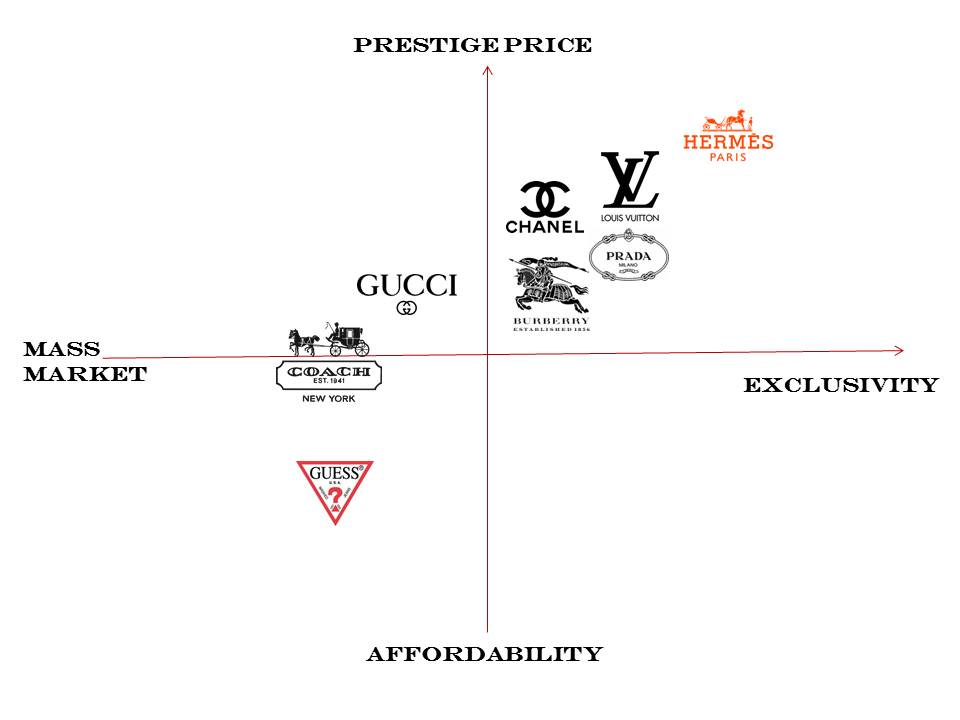
Talking about luxury brands in Shoes, bags, watches and clothing, not all brands are targeting everyone. When a brand is designed, it is designed keeping in mind a certain personality and image the brand creates for its brands and its followers. Their communication and pricing are driven by its positioning. Firstly, the mantra where the brand identifies itself fulfilling certain physical and emotional attributes and then later in comparison to the other brands.
This article can give you good insight on how brands work
For example, the following chart defines famous luxury brands on the graph of pricing and audience.
Spotting Authentic Luxury Goods
Of course, when indulging in luxury shopping, it’s crucial to distinguish between genuine items and counterfeits. Authentic luxury goods are crafted with exceptional attention to detail and quality. Price can often be a telling factor, as anything that seems too good to be true probably is. Additionally, genuine luxury items showcase impeccable craftsmanship, logos, and brand names that counterfeit products may lack.
In conclusion, luxury shopping is not just about purchasing items; it’s about experiencing emotions and fulfilling desires. People buy luxury goods for various reasons, driven by their attachment to the strong emotions these purchases evoke. So, whether you’re shopping within your budget or indulging in something more extravagant, luxury shopping offers a world of emotions and experiences waiting to be explored.